Introduction
Most workplace injuries don't happen because employees lack safety knowledge. They happen because the right behaviors aren't consistently reinforced where it matters most—on the job. Supervisors sit at the center of this gap. They're the direct link between organizational safety policy and whether a worker actually puts on fall protection that day, reports a near-miss, or takes a shortcut under pressure.
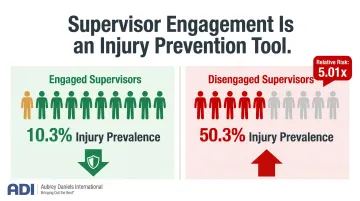
That positioning makes supervisor safety training one of the most impactful investments an organization can make. Research confirms it: workers with unsupportive supervisors face a 50.3% injury rate compared to just 10.3% when supervisors actively engage in safety. Yet most supervisor safety training still treats supervisors as passive recipients of compliance information rather than active leaders who shape culture daily.
This guide covers what effective supervisor safety training should include, how to move from knowledge transfer to lasting behavior change, and practical resources for building a program that delivers measurable results.
TLDR
- Supervisor safety training builds the skills to prevent incidents, model safe behavior, and reinforce safety culture—not just meet compliance checkboxes
- Effective programs include hazard recognition, OSHA regulations, emergency response, incident investigation, and the communication skills to influence worker behavior
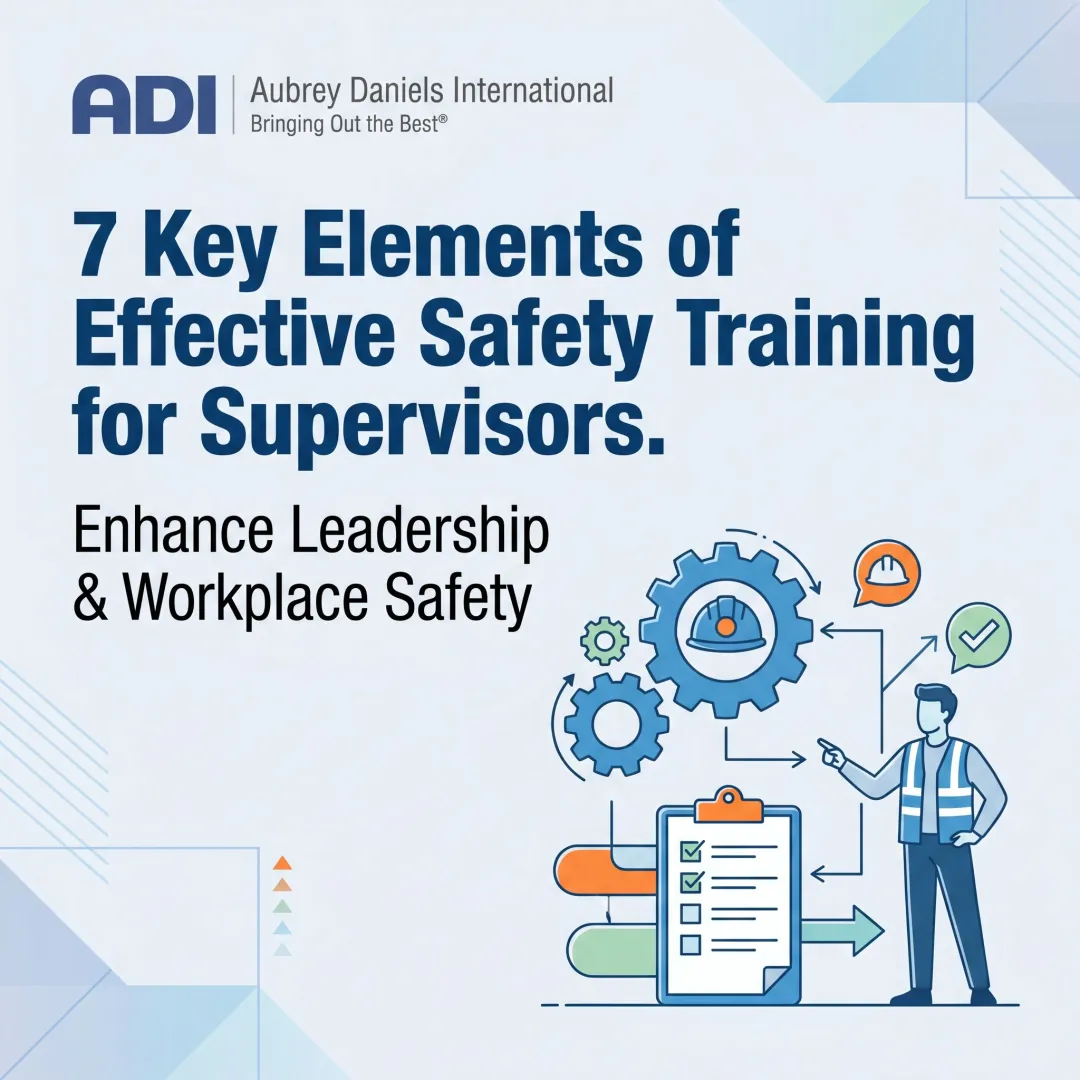
- Structured programs follow 7 core elements—from leadership commitment and hazard identification to incident investigation and continuous improvement
- Training methods grounded in behavior change—not just knowledge transfer—produce lasting reductions in incidents and injuries
- Sustaining a safety culture requires supervisors to reinforce safe behavior long after the training session ends
Why Supervisor Safety Training Is a Leadership Imperative
Supervisors Control the Safety Dial
Supervisors occupy a unique position in workplace safety. They are the most influential people in determining whether safety rules are followed on a given day. Policies, procedures, and posters don't prevent accidents—supervisors do, through the daily choices they make about what to prioritize, recognize, and reinforce.
Approximately 90% of workplace accidents are attributed to unsafe behavior and human error, not lack of knowledge. Workers know what's safe. The question is whether their supervisor creates an environment where following those rules is expected, supported, and valued.
The data is stark. Workers experiencing occupational health and safety vulnerability combined with no supervisor support had a Relative Risk of 5.01 for physical injury—a fivefold increase compared to workers with supportive supervisors. Injury prevalence jumped from 10.3% with engaged supervisors to 50.3% with disengaged ones. Supervisor engagement is not a soft skill—it's a measurable injury prevention tool.
Legal and Financial Stakes
OSHA doesn't view supervisor safety training as optional. 29 CFR 1960.55 requires agencies to provide safety and health training for supervisory employees, covering 13 specific elements including supervisory responsibility for safe conditions, applicable standards, hazard recognition, procedures for hazard abatement, and skills in training and motivating subordinates toward safe work practices.
29 CFR 1960.9 states explicitly: "Employees who exercise supervisory functions shall, to the extent of their authority, furnish employees employment and a place of employment which are free" from recognized hazards. Untrained supervisors expose organizations to significant citation, penalty, and liability risk.
The financial cost of failure is documented in the numbers:
- Average cost per medically consulted injury: $48,000; deaths average $1.54 million (National Safety Council)
- Total work injury costs reached $181.4 billion in 2024
- Musculoskeletal injuries alone account for nearly $32.6 billion annually
Compliance Training vs. Leadership Training
Compliance-based training teaches supervisors what the rules are. Leadership-based safety training teaches them how to influence the behavior of their teams so those rules are actually followed. One produces knowledge; the other produces results.
A supervisor who can recite lockout/tagout procedures but doesn't know how to coach an employee who skips them, recognize safe behavior when it happens, or conduct a non-punitive safety conversation has been trained for compliance, not for results.
The ROI of Getting It Right
Investing in supervisor safety training delivers measurable returns. After safety leadership training with coaching, one study showed mean safety compliance increased by 15.3%, from 80.38% to 95.68%, with improved safety climate scores.
A Cal/OSHA study found that inspected firms saved an average of $355,000 in injury claims over four years, with a 9.4% drop in injury claims and 26% average savings on workers' compensation costs. In Pennsylvania, OSHA inspections with penalties reduced injuries by 19-24% annually in the two years following inspection.
The data consistently points in one direction: organizations that train supervisors to lead on safety spend less, lose less, and build stronger safety cultures over time.
What Should Be Included in Supervisor Safety Training
Effective supervisor safety training goes beyond hazard checklists. It must build both technical knowledge and people-management capabilities specific to safety.
The Core Knowledge Areas
Supervisors need foundational technical knowledge across several domains:
- OSHA regulations applicable to their industry – Understanding the standards that govern their workplace and the specific requirements for their sector
- Hazard identification and risk assessment – Recognizing physical, chemical, ergonomic, and behavioral hazards before they cause harm
- Lockout/tagout (LOTO) procedures – 29 CFR 1910.147 requires employers to establish energy control procedures and train authorized and affected employees
- Personal Protective Equipment (PPE) requirements – 1910.132 mandates that employers assess workplace hazards and ensure employees demonstrate understanding and proper use of PPE
- Incident investigation procedures – How to investigate accidents and near-misses to identify root causes, not just assign blame
- Emergency action planning – Response protocols for fires, chemical spills, medical emergencies, and evacuations
- Recordkeeping obligations – OSHA 300 logs, injury reporting timelines, and documentation requirements
- Hazard Communication (HazCom/GHS) – Supervisors must understand how to read and communicate Safety Data Sheets and ensure workers understand the chemicals and risks in their environment
That technical knowledge sets the floor. What determines whether supervisors actually improve safety outcomes is what they do with it.
The Three Types of Safety Training Supervisors Need
Supervisors must be equipped to deliver all three types of safety training to their teams—not just receive training themselves:
- Initial/Onboarding Training – Covers foundational rules, hazards, and compliance requirements for new employees or those moving to new roles
- Ongoing/Refresher Training – Reinforces and updates knowledge over time, addressing new regulations, equipment, or procedural changes
- Situational/Just-in-Time Training – Delivered in response to a near-miss, new equipment introduction, procedural change, or seasonal hazard
Delivering these three types well demands a second skillset that most safety programs never address: the ability to change behavior, not just communicate information.
The Supervisory Skills Component
Most supervisor safety training stops at regulations and hazards, leaving supervisors without tools for the interpersonal work of actually influencing what workers do.
Supervisors need training in:
- How to conduct safety observations without triggering defensiveness – Approaching workers in a way that invites dialogue, not resistance
- How to deliver corrective feedback that motivates behavior change – Providing feedback that addresses the behavior, not the person, and reinforces the desired alternative
- How to recognize and reinforce safe behavior when they see it – Catching people doing things safely and acknowledging it specifically and promptly creates positive feedback loops
Positive reinforcement — delivered specifically, promptly, and consistently — is the mechanism that turns compliance into habit. Supervisors who can't do that are left hoping workers follow rules, rather than building teams that genuinely do.
The 7 Core Elements of an Effective Supervisor Safety Training Program
A well-designed supervisor safety training program is a structured system with interconnected components, not a one-time event. OSHA's Recommended Practices for Safety and Health Programs outlines a framework that effective programs follow.
Element 1 – Management Leadership and Commitment
Safety training succeeds or fails based on visible commitment from leadership above the supervisor level. Supervisors will not prioritize safety training if senior leaders don't model it.
In an evaluation involving over 270 safety and health experts, management leadership and employee involvement were consistently ranked as the two most important elements of a safety management system.
Organizations signal genuine commitment through:
- Resource allocation for safety training and equipment
- Senior leaders walking the floor and participating in safety reviews
- Treating safety as a core business metric, not a compliance obligation
- Holding leaders accountable for safety outcomes
Element 2 – Hazard Identification and Risk Assessment
Supervisors should be trained to conduct Job Hazard Analyses (JHAs), which identify hazards before they occur by examining the relationship between the worker, the task, the tools, and the work environment.
Key JHA components include:
- Involving employees in identifying hazards
- Reviewing accident history
- Prioritizing jobs by injury rate and severity potential, then outlining each job's steps
- Identifying hazards at each step
- Developing control measures using the NIOSH Hierarchy of Controls: Elimination, Substitution, Engineering Controls, Administrative Controls, and PPE
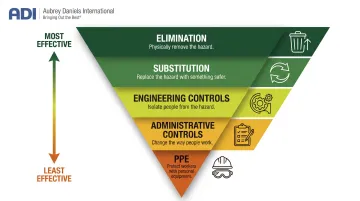
Physical hazards (machinery, chemicals, noise) are only part of the picture — supervisors also need to spot behavioral hazards like shortcuts, fatigue, and poor communication before they compound into incidents.
Element 3 – Training Delivery and Learning Verification
Design training to ensure actual learning, not just attendance. Sign-in sheets don't verify competency.
Effective training verification includes:
- Knowledge checks through assessments or verbal questioning
- Skills demonstrations in real or simulated work environments
- Return demonstrations where employees show they can perform the task safely
- Documentation that training was understood and competency achieved
Research from Harvard published in PNAS found that students scored higher on assessments following active-learning sessions versus traditional lectures, despite perceiving they learned more from lectures. The "feeling of learning" was inversely related to actual learning. Workers who sat through a lecture believed they were prepared — until the verification step proved otherwise.
Element 4 – Communication Systems
Supervisors must be trained in safety communication channels:
- Toolbox talks – Brief, focused safety discussions at the start of shifts
- Shift briefings – Daily updates on hazards, incidents, and safety priorities
- Safety committee participation – Representing frontline concerns and feedback
- Hazard reporting systems – How to surface near-misses and hazard reports from frontline workers without retaliation risk
Communication must flow both ways—supervisors need mechanisms to escalate safety concerns upward and broadcast safety information downward.
Elements 5–7 – Recordkeeping, Incident Investigation, and Continuous Improvement
The final three elements reinforce each other: accurate records inform better investigations, and better investigations drive the continuous improvements that prevent future incidents.
Element 5: Proper Documentation and OSHA Recordkeeping
- Maintaining OSHA 300 logs accurately
- Understanding recordable vs. non-recordable injuries
- Meeting reporting timelines for serious incidents
Element 6: Incident Investigation Techniques
- Identifying root causes rather than assigning blame
- Using tools like the 5 Whys or Fishbone Diagrams
- Interviewing witnesses without leading questions
- Documenting findings and corrective actions
Element 7: Continuous Improvement Process
- Regularly reviewing safety data and feedback
- Adjusting training and procedures based on findings
- Tracking leading indicators (near-misses, safety observations) not just lagging indicators (injuries)
- Creating a feedback loop that turns lessons learned into system improvements
How to Deliver Safety Training That Actually Changes Behavior
Traditional safety training has a fundamental flaw: passing a test or watching a video rarely changes what people actually do on the job. A supervisor can ace a quiz on hazard identification and still overlook the same risks the next morning. Knowledge matters — but behavior is what keeps people safe.
The Behavioral Science Foundation
Behavior change happens when the right behaviors are practiced, reinforced, and followed by positive consequences. E. Scott Geller's landmark 2001 paper outlines seven key behavior-based safety principles:
- Focus on observable behavior
- Look for external factors influencing behavior
- Use the ABC model (Activator-Behavior-Consequence)
- Focus on positive consequences to increase safe behavior
- Apply the scientific method
- Use theory to integrate information
- Consider internal feelings and attitudes
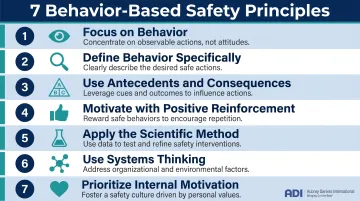
The DO IT process—Define target behaviors, Observe, Intervene, Test—gives supervisors a practical framework for applying these principles in daily work. ADI's approach builds directly on this foundation. Judy Agnew's co-authored book Safe by Accident translates these principles into field-ready tools that help supervisors build lasting safety behavior — not just temporary compliance.
Why Most Training Fails to Stick
Research shows that behavior change is inherently unstable. Roughly 70% of individuals who quit illicit drug use, smoking, or problem drinking relapse within one year — and workplace safety behavior follows a similar pattern.
The issue is context-dependency. Safety habits built in a classroom weaken the moment someone returns to the floor. An employee may avoid an unsafe shortcut while a supervisor is watching, then revert the moment they leave.
Training must happen across multiple contexts and be reinforced on the job — not just checked off in a conference room.
Practical Delivery Recommendations
Replace lecture-only formats with scenario-based learning:
- Present realistic safety dilemmas supervisors will actually face
- Have participants practice delivering corrective feedback in simulated scenarios
- Use case studies drawn from your own workplace incidents
Make skill practice non-negotiable:
- Have supervisors conduct mock safety observations, not just hear about them
- Use video scenarios or simulated workstations for hands-on practice
- Give immediate, specific feedback on their approach — not general praise
Build follow-up into the program design: Follow-up is where most training programs fall short. After the session, observe supervisors applying skills on the job. Reinforce what's working, coach what isn't, and repeat — because one round of feedback rarely creates lasting change.
Meta-analyses show behavior-based safety interventions produce significant results: one study of 73 sites across 229 companies found an average incident rate reduction of 26% in year one, increasing to 69% by year five.
Turning Supervisor Training Into a Safety Culture That Lasts
A training program has a start and end date. A safety culture exists in what supervisors do every day when no one is watching. Supervisor training must include explicit guidance on the daily habits that sustain safety—not just the content of a two-day course.
What Is Safety Culture?
NIOSH defines safety culture as "the core values and behaviors that come about when there is collective and continuous commitment by organizational leadership, managers, and healthcare workers to emphasize safety over competing goals."
Culture is what happens between training sessions. It's the pattern of recognition, feedback, priorities, and consequences that supervisors create through thousands of small daily interactions.
The Power of Behavioral Reinforcement
Supervisors who learn to catch workers doing things safely and acknowledge it—specifically and promptly—create positive feedback loops that make safe behavior more likely to persist.
Contrast this with organizations that only respond to unsafe behavior. Geller's research shows that punishment provides only temporary suppression and can trigger sabotage or aggression.
The pattern runs deeper than it looks: safe behavior is often inadvertently punished (it's less convenient, takes more time, may draw ridicule) while at-risk behavior is rewarded (faster, easier, more efficient). Behavior-based safety seeks to reverse this by making safe behavior more rewarding than shortcuts.
Key tools supervisors need:
- Immediate, specific positive feedback — for example: "I noticed you stopped to put on your gloves before handling that chemical—that's exactly what we need"
- Questions that promote problem-solving rather than defensiveness — for example: "What would make it easier to use the guard every time?"
- Techniques for building peer accountability without blame
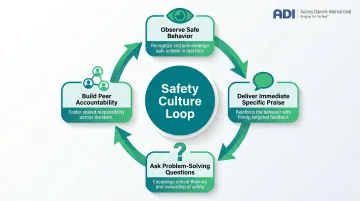
Systems-Level Support Required
Training alone cannot sustain culture change. Organizations must ensure supervisors have:
- Management support – Senior leaders who back up supervisors' safety decisions
- Time allocated for safety activities – Safety observations, coaching conversations, and follow-up can't be squeezed into already-packed schedules
- Consistent messaging from senior leaders – Mixed messages destroy credibility
- Access to ongoing coaching – Supervisors need support as they practice new skills
ADI's consulting and certification programs help organizations build internal behavioral coaching expertise—giving supervisors and their managers the reinforcement tools to sustain safety habits long after formal training ends.
Frequently Asked Questions
What should be included in supervisor safety training?
Supervisor safety training should cover OSHA/regulatory knowledge, hazard identification, incident investigation, emergency response, and the communication skills needed to reinforce safe behavior. It must address both technical competencies and the interpersonal skills required to coach, recognize, and influence workers.
What are the three types of safety training?
The three types are initial/onboarding training (foundational rules and hazards for new employees), ongoing/refresher training (reinforcement and updates over time), and situational/just-in-time training (delivered in response to incidents, new equipment, or procedural changes). Supervisors must both receive and deliver all three types.
What are the 7 core elements of a safety program?
The 7 core elements are management leadership and commitment, hazard identification and assessment, training delivery and learning verification, communication systems, proper recordkeeping and documentation, incident investigation procedures, and continuous improvement processes. Each element depends on the others — gaps in any one area weaken the whole program.
What are the topics related to occupational health and safety?
Key topics include physical hazards (machinery, falls, noise), chemical safety, ergonomics, emergency procedures, mental health and fatigue management, PPE use, and compliance with OSHA standards and NIOSH guidelines.
What are the 5 C's of health and safety?
The 5 C's — drawn from HSE UK's HSG65 guidance — are Competence, Control, Cooperation, Communication, and Commitment. The first four define how risk is managed day-to-day; Commitment reflects leadership's role in sustaining safety culture. All five map directly to a supervisor's daily responsibilities.