Most manufacturing facilities have safety rules documented, posted, and reviewed regularly. Yet incidents continue to occur. The gap between policy on paper and practice on the floor represents the real problem—and it's a behavioral one, not just a compliance issue. This article covers 13 concrete safety practices that close that gap, spanning physical controls, process discipline, and the human behavioral layer that determines what people actually do under pressure.
TL;DR
- Manufacturing accounts for a disproportionate share of serious workplace injuries due to heavy machinery, chemical exposure, and fast production cycles
- Lasting safety improvement requires three layers working together: physical controls, process discipline, and a culture where safe behavior is the norm
- Near-miss reporting, ergonomics, and lockout/tagout are among the highest-impact practices — and the most consistently under-implemented
- Safety culture is built through consistent positive reinforcement of safe behaviors, not rules alone
- Leading indicators — near-miss rates, audit scores, training completion — predict risk better than waiting for injuries to signal a problem
Why Manufacturing Safety Demands More Than Checklists
Manufacturing environments concentrate multiple hazard types in a single space:
- Machinery with moving parts and pinch points
- Chemical exposures and airborne particulates
- Ergonomic strain from repetitive motion tasks
- Slip, trip, and fall risks
- Electrical hazards from equipment and wiring
These risks compound under time pressure and production targets, making even experienced workers vulnerable when shortcuts become routine.
Checklists and compliance frameworks are necessary but insufficient. Research shows that production pressure, workload, and leadership practices systematically shape behavior even when workers know the rules.
Most manufacturing incidents happen not because workers lack knowledge, but because workplace pressure, habit, and shortcut-taking override what they know. That's the behavioral dimension—and it's what separates facilities that maintain strong safety records from those that don't.
13 Safety Practices in Manufacturing to Implement Today
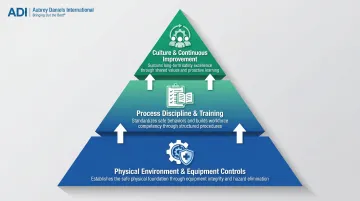
The 13 practices below are grouped into three operational layers—physical environment, process and training, and culture and continuous improvement—so leaders can assess where their gaps are most acute.
Physical Environment and Equipment Controls
Practice 1: Conduct regular hazard identification walkthroughs
Schedule structured walkthroughs to surface equipment, ergonomic, and environmental risks before they escalate. Involve operators who work with equipment daily; they spot hazards that management overlooks.
Practice 2: Ensure machine guarding, lockout/tagout, and preventive maintenance
Lockout/tagout violations consistently appear in OSHA's Top 10 cited standards, and for good reason: compliance with LOTO procedures prevents an estimated 120 fatalities and 50,000 injuries annually. Yet guards get removed for convenience, and LOTO gets skipped during "quick" tasks. Establish strict enforcement and audit frequency.
Practice 3: Maintain rigorous housekeeping standards
Clear walkways, organized workstations, and spill protocols represent one of the simplest and highest-impact injury-prevention actions. Clutter creates trip hazards, obscures hazards, and signals that safety is negotiable.
Practice 4: Enforce role-specific PPE use
Match PPE to actual task exposure — don't apply it generically. Ensure workers have access to properly fitting equipment and understand when and why each piece is required.
Physical controls are the most visible layer of safety — and the most prone to silent erosion. Without active reinforcement, even well-designed controls degrade. Treat them as living requirements, not fixed installations.
Process Discipline and Training
Practice 5: Document and communicate clear safety protocols
Expectations must be unambiguous across shifts. Document every task and role with clear safety protocols, then communicate them consistently during shift handoffs, toolbox talks, and onboarding.
Practice 6: Provide comprehensive, ongoing safety training
Highly engaging, hands-on training produces substantially larger reductions in accidents and illnesses than passive methods. Yet training effectiveness depends on reinforcement afterward. Competencies decay over time without practice, which means refreshers are essential—not optional.
Practice 7: Design ergonomic workstations
Musculoskeletal disorders represent 30% of all workplace injuries requiring days away from work, with manufacturing accounting for a significant share. Incorporate adjustable equipment, optimized tool placement, and job rotation for repetitive-motion roles to reduce strain.
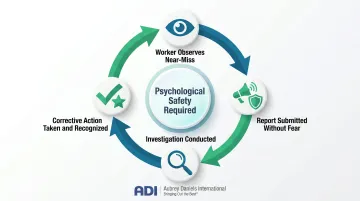
Practice 8: Establish formal near-miss reporting
Near-miss data is among the richest leading indicators of where serious incidents are likely to occur next. OSHA explicitly positions near-miss reporting as a leading indicator organizations should track to prevent serious events.
Most near misses go unreported because workers fear blame or don't see value in reporting. Normalize the practice by responding to every report with appreciation, investigation, and visible corrective action — never punishment.
Culture, Communication, and Continuous Improvement
Practice 9: Conduct regular safety audits
Audits should evaluate both conditions and behaviors, not just compliance checkboxes. Track whether workers actually follow protocols, not just whether protocols exist on paper.
Practice 10: Use safety KPIs as leading indicators
Track near-miss reports submitted, audit scores, and training completion rates rather than relying exclusively on injury rates after the fact. Leading indicators reveal risk before incidents occur; lagging indicators only confirm harm has already happened.
Practice 11: Implement clear emergency response protocols
Facility-wide communication systems and practiced evacuation drills ensure everyone knows what to do when seconds matter. Review and update emergency plans annually, and drill them quarterly.
Practice 12: Enable open, two-way communication
Workers who spot hazards must feel psychologically safe to report without fear of reprisal. Create multiple reporting channels and respond to every concern with action and feedback.
Practice 13: Apply cross-departmental safety tours
Familiarity blindness causes workers to stop seeing hazards they encounter daily. Rotate workers from different areas through safety tours to spot risks the regular team has normalized.
Practices 9–13 don't work as one-time initiatives. Their impact depends on behavioral consistency — reinforced daily through leadership actions, not just policy documents. A facility that executes all five well builds a safety culture that sustains itself through turnover, production pressure, and change.
To make cultural consistency stick, focus on these reinforcement actions:
- Recognize workers who report hazards or near misses promptly and specifically
- Close the loop on every audit finding with visible corrective action
- Hold supervisors accountable for safety behaviors, not just output metrics
- Review leading indicator trends monthly with frontline teams, not just in management meetings
The Behavioral Science Behind Lasting Safety
The most overlooked reason manufacturing safety programs fail is a fundamental misunderstanding of behavior: safety training tells workers what to do, but what workers actually do is shaped primarily by consequences—what happens after they act safely or unsafely.
Antecedents—safety signage, rules, briefings—prompt behavior but don't sustain it. Consequences determine whether behavior continues. When shortcuts go unpunished and safe behavior goes unnoticed, unsafe habits become the norm despite full knowledge of the rules.
Positive reinforcement applied specifically to safe behaviors is what builds habitual safety. In one automobile parts manufacturing plant, integrating behavior-based safety with immediate feedback and positive reinforcement produced a 99% reduction in lost-time case rate and a 92% reduction in first-time occupational clinic visits over seven years.
A separate safety leadership intervention in wood-processing manufacturing achieved a 15.3% increase in observed safety compliance through three specific mechanisms: leadership modeling, immediate feedback, and short frequent toolbox talks.
The "success trap" poses another risk: a long streak of zero incidents causes leadership to reduce vigilance, audit frequency, or reinforcement. Behavioral science addresses this by focusing on behavior frequency, not just outcome metrics. Leaders must continue to observe and reinforce safe behaviors even when incidents are low.
Leaders model safe behavior visibly and consistently, or they undermine it. Three supervisor behaviors that quietly erode safety culture:
- Skipping PPE during a "quick" task, signaling that rules are optional under time pressure
- Waving off near-miss reports, communicating that close calls aren't worth the paperwork
- Praising output speed while ignoring safe technique, reinforcing the wrong priorities
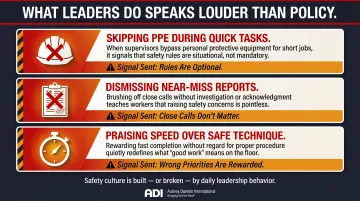
Each of these sends a clearer message than any policy document — and workers notice.
Common Safety Mistakes Manufacturing Leaders Make
Mistake 1: Treating Safety Training as a One-Time Event
Onboarding training without refreshers leads to knowledge decay and behavioral drift—unsafe habits quietly replacing safe ones. Skills and awareness erode without practice and reinforcement, leaving workers reliant on habit—which may not be safe.
Mistake 2: Measuring Safety Performance Exclusively with Lagging Indicators
TRIR and injury rates measure past harm. Leading indicators—near-miss reports, audit scores, training completion—predict future risk and enable proactive intervention before someone gets hurt.
Mistake 3: Responding to Violations Only with Punishment
Corrective action without recognition creates a compliance-minimum culture. Workers do the minimum to avoid punishment rather than act from genuine commitment. Recognizing safe behavior shifts that dynamic—people start choosing safe actions because they see the value, not because they fear the consequence.
Each mistake represents a systems or leadership failure, not employee carelessness. The environment leaders create determines the behavior they get.
Conclusion
The 13 safety practices covered span physical, procedural, and cultural layers — and sustainable improvement requires all three working together. Physical safeguards stop incidents at the source; process discipline ensures consistency; and culture determines what happens when no one is watching.
Manufacturing leaders must look beyond compliance and toward the behavioral environment they create daily. Rules and equipment only go so far — what people actually do when conditions get difficult depends on the culture around them.
ADI's behavior-based consulting helps manufacturing organizations build safety cultures where safe behavior is genuinely reinforced, not just required. To build that culture through behavioral science, explore how ADI can help at aubreydaniels.com.
Frequently Asked Questions
How to improve safety culture in industry?
Improving safety culture requires leadership to consistently model and positively reinforce safe behaviors—not just enforce rules—combined with open communication channels and systems that recognize safe actions rather than only penalizing violations.
What's the 20/20/20 rule in OSHA?
The 20/20/20 rule is an ergonomic guideline for eye strain prevention: every 20 minutes, look at something 20 feet away for 20 seconds. It's not a formal OSHA standard, but it mirrors the practical case for scheduling ergonomic micro-breaks in manufacturing to prevent cumulative strain injuries.
What are the most common safety hazards in manufacturing?
The main categories include machinery-related risks (moving parts, pinch points, lockout/tagout failures), slips/trips/falls, chemical or hazardous material exposure, ergonomic strain from repetitive motion, and electrical hazards. Many incidents involve familiar hazards workers have stopped treating as dangerous.
Why do manufacturing safety programs fail to produce lasting results?
Most safety programs focus on rules, procedures, and compliance without addressing the behavioral layer: what consequences workers actually experience for safe vs. unsafe behavior. When that layer is missing, safe habits never fully take hold and erode quickly under production pressure.
What is behavior-based safety in manufacturing?
Behavior-based safety applies behavioral science to identify which specific actions lead to safe or unsafe outcomes, then uses reinforcement strategies to make safe behaviors more consistent across the workforce.
How do you measure safety performance in a manufacturing plant?
Effective measurement uses two categories: lagging indicators (TRIR, lost-time injury rate) that document past harm, and leading indicators (near-miss reports, safety audit scores, training completion, safe behavior observations) that predict future risk. Track both, but prioritize leading indicators to get ahead of problems before they become incidents.