Introduction
Mining remains one of the world's most hazardous industries. Operations span extreme underground depths and remote surface sites where equipment failures, environmental hazards, and human error converge with potentially catastrophic consequences. Mining employs approximately 1 percent of the global workforce yet accounts for roughly 8 percent of fatal workplace accidents, according to the International Labour Organization. In the United States alone, MSHA reported 31 mining fatalities in 2024 across 330,122 miners—a stark reminder that safety failures carry irreversible consequences for workers, operations, and corporate reputation.
As of 2026, mine safety management has evolved beyond reactive compliance checklists into proactive, technology-driven frameworks. Choosing the right Safety Management System (SMS) is now a strategic decision with direct impact on incident rates, regulatory standing, and workforce retention.
The mining safety equipment market (monitoring systems, protective gear, and digital safety platforms) was valued at $14.2 billion in 2024 and is projected to reach $20.8 billion by 2033, growing at 4.5 percent annually. The safety monitoring systems subsegment is expanding even faster at 5.7 percent CAGR—driven by accelerating demand for real-time, data-driven safety solutions across the sector.
TL;DR
- A Safety Management System for mining centralizes hazard identification, incident reporting, compliance tracking, training, and emergency response in one platform
- Top SMS platforms in 2026 combine AI-driven predictive analytics, real-time IoT monitoring, automated compliance, and mobile accessibility
- Top picks include SafetyCulture, Kynection, KPA, EHS Insight, and Ideagen—each suited to different operational scales and regulatory requirements
- Prioritize integration capability, offline functionality, MSHA/ISO 45001 alignment, and behavioral safety culture support over raw feature count
- The best outcomes pair capable SMS platforms with active workforce engagement in safe behaviors
Overview of Safety Management Systems in Mining
A Safety Management System (SMS) in mining is a structured framework—often software-enabled—that identifies hazards, controls risks, documents safety procedures, tracks compliance, and drives continuous improvement across the full mining lifecycle. While traditional paper-based systems relied on manual checklists and periodic audits, modern SMS platforms digitize these processes and integrate real-time data from IoT sensors, wearables, and mobile devices.
Three forces are driving SMS adoption in 2026:
- Regulatory pressure from agencies like MSHA and international frameworks such as ISO 45001
- Digital transformation of paper-based safety processes into real-time, data-driven workflows
- IoT deployment of sensors and wearables that monitor personnel location, equipment status, and environmental conditions
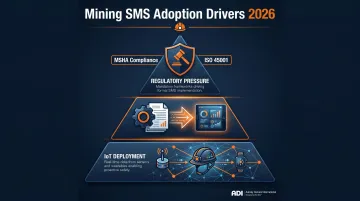
Mining Technology analysts note that integrated sensor networks now deliver these capabilities continuously — something analog systems cannot replicate.
One concrete example: After deploying SafetyCulture, Newmont reports that 11 mines across 3 continents now conduct over 1,000 inspections daily—an 8x increase in auditing frequency compared to their paper-based processes. That kind of scale is only possible when inspection data flows digitally, in real time, across every site.
With dozens of platforms claiming to be purpose-built for mining, the section below evaluates the five best safety management systems based on criteria relevant to mining operations in 2026.
Best Safety Management Systems for Mining Operations in 2026
Selection was based on mining-specific functionality, regulatory compliance support (MSHA, ISO 45001), real-time monitoring capability, scalability, mobile and offline performance, and user feedback from high-risk industrial environments.
SafetyCulture
SafetyCulture (formerly iAuditor) is a cloud-based inspection and safety platform trusted by major mining companies globally, including Newmont. It offers a comprehensive suite covering audits, inspections, incident management, and real-time reporting—available on mobile, web, and offline.
Differentiators: SafetyCulture is recognized for its mining-specific template library (critical control audits, site safety inspections), geo-tagging for multi-site visibility, and Heads Up for real-time team communication. It is rated 4.6/5 on Capterra and supports teams from small operations to enterprise-scale mines.
| Aspect | Details |
|---|---|
| Key Features | Mining inspection templates, critical control audits, incident management, real-time monitoring via sensors, geo-tagging, offline reporting, analytics dashboards |
| Pricing | Free version available for teams up to 10; Premium plan starts at $24/user/month (billed annually, 30-day free trial) |
| Platforms Supported | Web, iOS, Android (mobile-first with offline capability) |
Kynection (KIM)
Kynection's KIM platform is an all-in-one operations and safety management system designed for high-risk industries, including mining. It consolidates asset management, job scheduling, HSEQ compliance, and safety reporting into a single unified platform to eliminate data silos.
Differentiators: KIM provides real-time location and status tracking for both personnel and equipment, automated SWMS (Safe Work Method Statements), and customizable compliance workflows. Its ability to integrate safety, operations, and asset data in one system makes it particularly valuable for large or multi-site mining contractors.
| Aspect | Details |
|---|---|
| Key Features | Unified HSEQ management, real-time asset and personnel tracking, automated compliance workflows, SWMS automation, employee qualification tracking, job scheduling integration |
| Pricing | Contact Kynection for a customized quote based on operation size and modules required |
| Platforms Supported | Web, iOS, Android |
KPA
KPA is an EHS management software provider with a strong focus on compliance for industries operating under strict regulatory frameworks. In mining, KPA is particularly well-regarded for helping operations align with MSHA regulations through mobile-first tools.
Differentiators: KPA excels in frontline compliance—its mobile-first interface enables field workers to complete safety inspections, report incidents, and conduct audits in real time. Automated notifications alert managers to expiring certifications and upcoming inspections, preventing missed inspections or lapsed certifications.
| Aspect | Details |
|---|---|
| Key Features | MSHA-aligned compliance checklists, mobile incident reporting, automated equipment inspection scheduling, employee certification tracking, safety audit workflows |
| Pricing | Contact KPA for pricing; tailored to organization size and compliance scope |
| Platforms Supported | Web, iOS, Android (mobile-first design) |
EHS Insight
EHS Insight is a flexible, modular EHS software platform designed to manage safety, environmental compliance, and operational risk. Its scalable architecture makes it suitable for both mid-size and enterprise mining operations.
Differentiators: EHS Insight is particularly strong in offline functionality—critical for remote or underground mining sites with limited connectivity. Its customizable modules allow safety teams to build workflows tailored to site-specific hazards, and its analytics engine helps identify leading and lagging safety indicators across the operation.
| Aspect | Details |
|---|---|
| Key Features | Modular EHS workflows, offline mobile capability, advanced analytics and trend reporting, incident and corrective action management, risk register, audit management |
| Pricing | Contact EHS Insight for a quote; modular pricing available |
| Platforms Supported | Web, iOS, Android (with offline mobile app) |
Ideagen (EHG / Damstra)
Ideagen's mining safety solutions—built on the EHG and Damstra platforms—are purpose-designed for enterprise-scale mining operations. The system is used by major mining groups and focuses on workforce management, contractor compliance, and site access control alongside core safety functions.
Differentiators: Ideagen takes a workforce-centric approach, using centralized worker profiles, skills matrices, and automated task-to-qualification matching to keep unqualified workers away from hazardous areas. Its integration with ERP systems, HR platforms, and physical access control (such as turnstiles) makes it one of the most operationally embedded platforms on this list.
| Aspect | Details |
|---|---|
| Key Features | Centralized worker profiles and skills matrix, certification and license expiry tracking, contractor and workforce compliance management, ERP/HR/access control integration, incident reporting, regulatory form automation |
| Pricing | Contact Ideagen for enterprise pricing tailored to site size and module requirements |
| Platforms Supported | Web, iOS, Android |
Key Features to Look for in a Mining Safety Management System
While all five platforms above cover core SMS functions, buyers often make the mistake of selecting based on feature volume rather than fit. A system with 50 features poorly suited to underground remote operations is less valuable than a focused platform that performs reliably in the conditions your crews actually work in.
Real-Time Monitoring and Incident Reporting
In mining, real-time visibility can mean the difference between an alert and a fatality. IoT sensors tracking gas levels, seismic activity, equipment status, and worker location must feed into a unified dashboard that triggers instant alerts. Mobile incident reporting must function offline for underground and remote sites where connectivity is intermittent or nonexistent.
Look for platforms that support:
- Integration with wearable devices and environmental sensors
- Automated alerting when hazard thresholds are exceeded
- Offline data capture with automatic sync when connectivity returns
- Geo-tagged incident reports for spatial analysis
Compliance and Regulatory Management
Mining operations must comply with MSHA (US), ISO 45001, and regional standards. An effective SMS should automate compliance checklists, maintain digital audit trails, track worker certifications, and generate regulatory reports on demand—eliminating the risk of gaps discovered only at inspection time.
Key compliance capabilities include:
- MSHA Part 46 and Part 48 training plan templates and tracking
- Automated certification expiry alerts for workers and equipment
- Audit-ready documentation with timestamp and signature capture
- Regulatory reporting for MSHA Form 7000-1 and other required filings
Behavioral and Human Factors Support
This is a critical and frequently overlooked dimension. Most SMS platforms track lagging indicators (incidents, near-misses) but do not address the behavioral patterns that precede them.
The best safety outcomes come when technology is paired with a behavior-based safety approach. That means identifying what workers are actually doing, reinforcing safe behaviors positively, and addressing at-risk behaviors before incidents occur.
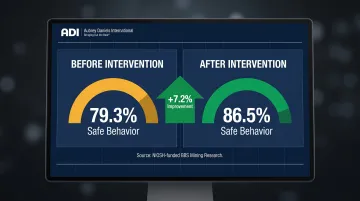
Research funded by NIOSH on behavior-based safety in mining documented that overall percent safe behavior improved from 79.3 percent to 86.5 percent after feedback and observation processes were implemented at multiple mine sites. Organizations like ADI (Aubrey Daniels International), which apply behavioral science to workplace safety, offer consulting frameworks that complement any SMS platform by building the safety culture the software depends on.
Integration and Scalability
Mining operations typically run multiple systems—ERP, fleet management, HR, access control. An SMS that cannot integrate with these creates double-entry, data gaps, and compliance risk.
Prioritize platforms that offer:
- Prebuilt API integrations with common ERP and HR systems
- Cloud-based architecture for multi-site scalability
- Genuine offline functionality for remote operations
- Role-based access controls for contractors and temporary workers
Analytics and Safety Performance Benchmarking
The most advanced platforms support both lagging indicators (lost time injuries, incident frequency rates) and leading indicators (near-miss reports, unsafe act observations, training completion rates). Custom dashboards and cross-site benchmarking help safety managers identify systemic risks before they become incidents.
Effective analytics should include:
- Trend analysis across sites, shifts, and work groups
- Root cause analysis tools with visual reporting
- Benchmarking against industry standards
- Predictive analytics identifying high-risk scenarios
How We Chose the Best Mining Safety Management Systems
The systems listed were selected based on mining-specific functionality (not generic EHS software adapted for mining), evidence of deployment in high-risk extraction environments, regulatory compliance support, and the balance between technical capability and usability for frontline workers. Many operators select SMS platforms based on brand recognition or price alone. That approach skips the questions that matter most: Does it work offline underground? Does it align with MSHA and ISO 45001? Will field workers actually use it, or will it only get used in the office?
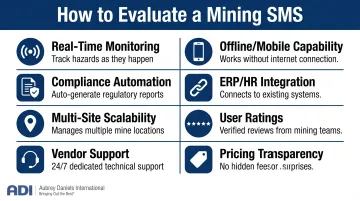
Key evaluation factors:
- Real-time monitoring and alert capabilities
- Mobile and offline functionality for underground/remote sites
- Compliance automation and regulatory reporting (MSHA, ISO 45001)
- Integration with existing operational systems (ERP, HR, fleet)
- Scalability across sites and workforce sizes
- User ratings and verified feedback from mining and heavy industrial deployments
- Vendor support for implementation and training
- Pricing transparency and free trial availability
- Vendor willingness to customize workflows for mining-specific hazards — confined spaces, blast zones, and gas exposure — since these directly affect how quickly a system delivers results and whether workers stick with it long-term
Conclusion
In 2026, mining safety management has moved beyond paper-based compliance into integrated, analytics-based platforms. The right SMS is one that aligns with your operation's specific hazards, workforce size, regulatory environment, and existing technology stack—not just the platform with the most features.
No software platform alone creates a safe mine. The most effective safety programs pair the right technology with a workforce that consistently adopts safe behaviors.
Organizations looking to address the human side of mining safety can work with ADI, whose consultants have applied behavior-based safety across high-risk industries—including mining, energy, and manufacturing—for over 45 years.
Whether evaluating your first SMS or upgrading an existing system, start by auditing your current safety gaps and use those findings to drive your selection.
Contact ADI at 1-678-904-6140 or info@aubreydaniels.com to learn how behavioral science can strengthen the safety approach behind your technology investment.
Frequently Asked Questions
What is the best safety management software for mining operations?
There is no single "best" platform. The right choice depends on operation size, regulatory environment (MSHA compliance in the US), and whether the site is surface or underground. SafetyCulture, Ideagen, and Kynection each lead in different areas — usability, enterprise workforce management, and unified operations, respectively.
What is the 5 point safety system in mining?
The 5 Point Safety System is a structured safety framework originating in Ontario in 1942. It typically covers: hazard identification, risk assessment, control implementation, monitoring/review, and worker training and communication—the core cycle of any compliant mine safety program.
What is FMS in mining?
FMS in mining stands for Fleet Management System—a technology platform that tracks the real-time location, utilization, speed, and maintenance status of mining vehicles and equipment. Most leading SMS platforms now integrate FMS data to connect equipment health with safety outcomes.
How does a safety management system differ from general safety software?
A Safety Management System (SMS) is a comprehensive, structured framework that integrates hazard management, compliance, training, incident reporting, and continuous improvement into a single system. General safety software may only address one or two of these functions (incident logging or checklists) without the systemic connective tissue an SMS provides.
What is ISO 45001 and how does it apply to mining safety management?
ISO 45001 is the international standard for Occupational Health and Safety Management Systems. In mining, it works alongside MSHA regulations to structure safety programs, and most leading SMS platforms include ISO 45001-aligned workflows and audit templates.
What role does worker behavior play in mining safety management?
Most mining incidents are preceded by at-risk behaviors, often repeated without consequence until a serious event occurs. Software captures incident data, but a behavior-based safety approach — identifying why unsafe behaviors happen and reinforcing safer ones — is what closes the gap between a well-documented SMS and a genuinely safe mine.